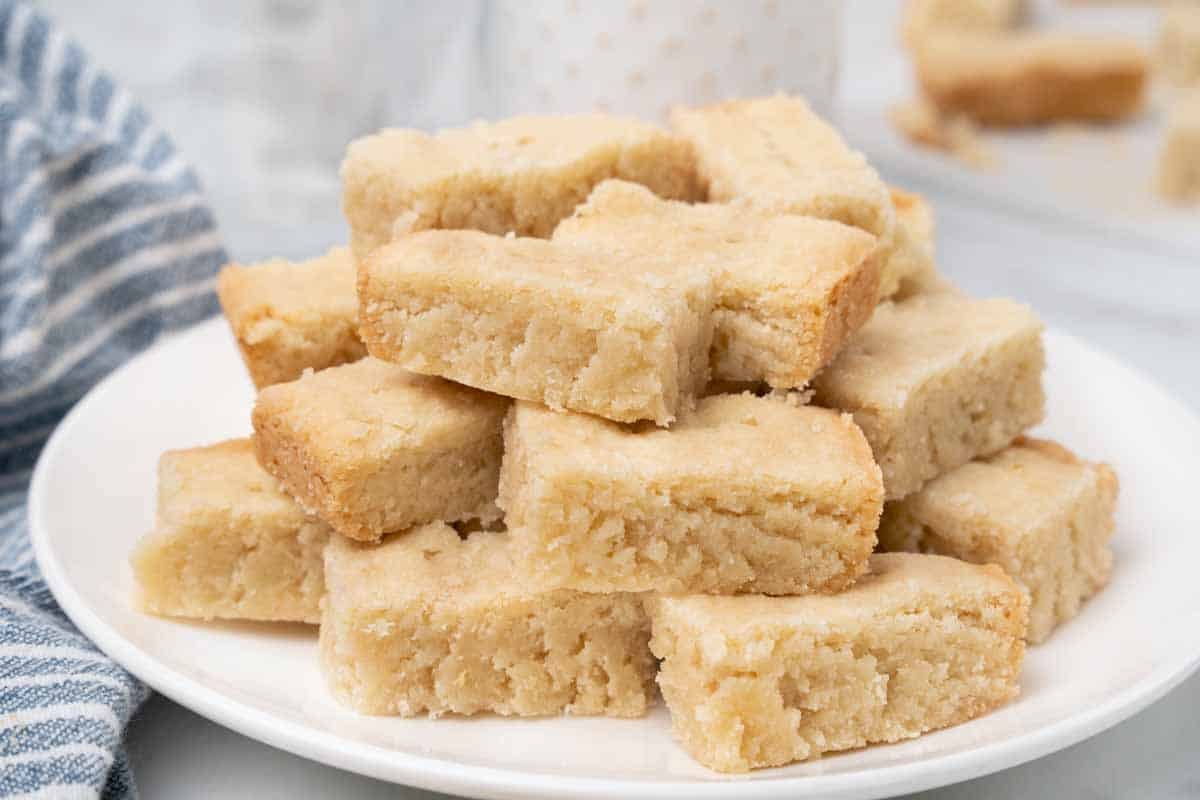
There are plenty of cookies that come and go with the seasons, but shortbread has earned its place as a classic. With just a handful of simple ingredients, it delivers a rich, buttery flavor and a delicate, melt-in-your-mouth texture that never gets old.
One of the things I love most about shortbread is its versatility. It’s wonderful all on its own with a cup of coffee or tea, but it also serves as the perfect canvas for other flavors. Add a little vanilla, citrus zest, culinary lavender, chopped nuts, or a drizzle of chocolate, and you have a completely different cookie without changing the foundation of the recipe.
As a pastry chef, I’ve learned that simple recipes leave very little room for shortcuts. Since there are so few ingredients, each one matters. Using good butter, measuring carefully, and avoiding overmixing are the keys to a tender, crumbly cookie that holds its shape while baking.
Whether you’re baking a batch for a holiday cookie tray, an afternoon tea, or just because you’re craving something sweet, this shortbread recipe is one you’ll find yourself coming back to. It’s easy enough for beginners and reliable enough to earn a permanent spot in any baker’s recipe collection.
Now, let’s make some cookies.

Authentic Scottish Shortbread Recipe
Ingredients
Instructions
- Preheat your oven to 375°F (190°C).
- In a large bowl, combine the butter and sugar. Mix until blended, but do not cream the mixture. The butter should be slightly softened, but not overly soft or melted. If you’re using a stand mixer or hand mixer, butter that’s cool to the touch works best.
- Add the flour and mix just until a stiff dough forms. Avoid overmixing, as this can make the cookies less tender. Once the dough comes together, it’s ready to use.
- Roll the dough to fit the baking pan or shape you plan to use. An 8 x 8-inch pan works well for traditional shortbread.
- Bake for 15 to 30 minutes, depending on the thickness and shape of your cookies. The shortbread is done when the edges are just beginning to turn a light golden color. It should remain fairly pale and not become deeply browned.
- As soon as the cookies come out of the oven, sprinkle them lightly with sugar if desired.
- Allow the shortbread to cool completely in the pan or on the baking sheet before transferring it to a wire rack. This helps prevent the delicate cookies from breaking while they’re still warm.
Notes
- For Shortbread Fingers
Transfer the rolled dough to your prepared pan. For classic shortbread, keep the dough fairly thick, about 3/4 inch (2 cm). Cut the dough into finger-shaped rectangles using a sharp knife or bench scraper. Make them wide enough that you can easily prick each one with a fork.
Prick each piece about halfway through with a fork to create the traditional pattern. - For a Round Shortbread
Shape the dough into a ball, then roll it into a circle. Lightly score the top into wedges, being careful not to cut all the way through. Finish by pricking the surface evenly with a fork. - For a Shortbread Mold
Lightly grease the mold and dust it with a little sugar to help the shortbread release cleanly. Press the rolled dough into the mold, trimming away any excess. Turn it out onto a baking sheet. If your mold has a plain surface, decorate the top by pricking it with a fork. - For Cut-Out Cookies
Roll the dough to about the same thickness you would use for sugar cookies. Cut out shapes with your favorite cookie cutters, transfer them to a prepared baking sheet, and prick each cookie evenly with a fork.


Leave a Reply